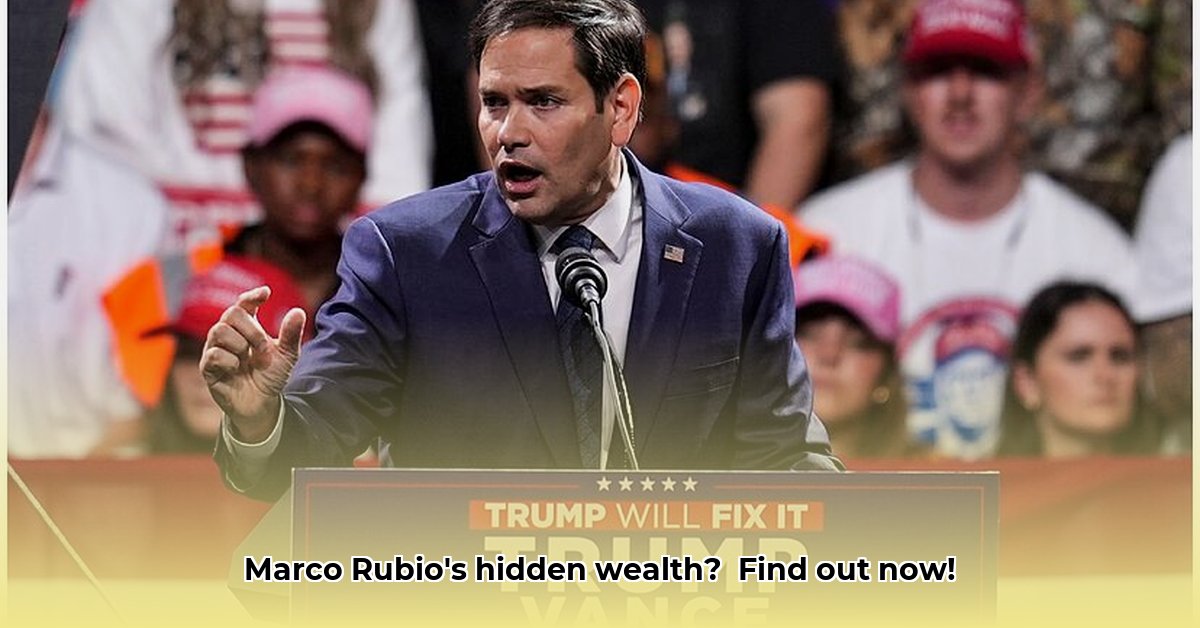
Unraveling the Puzzle: The Challenges of Assessing Senator Rubio's Finances
Determining Senator Marco Rubio's net worth proves surprisingly complex. Published reports vary dramatically, ranging from several hundred thousand dollars to over $13 million. This substantial discrepancy isn't due to a lack of effort; rather, it highlights inherent limitations in current financial disclosure regulations and the challenges of interpreting incomplete data. Understanding these challenges is crucial to grasping the complexities involved.
The Discrepancies: Why the Numbers Don't Match
The primary obstacle in accurately assessing Senator Rubio's net worth stems from the ambiguity of existing disclosure laws. Instead of precise figures, politicians often report assets within broad ranges (e.g., "$1 million to $5 million"), leaving considerable room for interpretation and creating significant challenges for those who try to determine a politician's accurate net worth. This lack of specificity makes it difficult to arrive at a consistent figure. Different news organizations and websites employ varying methodologies to estimate net worth, further exacerbating these discrepancies. These methods may differ in their valuation of assets, inclusion or exclusion of debts, and the educated guesses made based on limited information.
A Closer Look at Conflicting Reports
News reports showcase the wide range of estimates. Some suggest a net worth in the low millions, while others point to significantly higher figures based on perceived property holdings and rental income. This notable variation raises questions about the rigor and consistency of these estimations. Furthermore, potential biases, whether conscious or unconscious, could influence how analysts interpret the limited data available.
The Transparency Issue: Why Accurate Reporting Matters
The varying estimates of Senator Rubio's net worth highlight a critical problem: a lack of transparency in political finance. This problem extends beyond an individual politician; it undermines public trust and hinders informed discussions about critical political issues. How can citizens hold their elected officials accountable without a clear understanding of their financial situations?
Steps Towards Greater Transparency: Recommendations for Reform
Several key steps could significantly enhance transparency and accuracy in reporting politicians' finances:
Enhanced Disclosure Requirements: Stricter regulations are needed, mandating more precise reporting of assets and liabilities. Broad ranges should be replaced by specific figures to ensure a better understanding of a Senator's, including Marco Rubio's, financial well-being.
Standardized Valuation Methods: Establishing consistent valuation methods for assets and liabilities would reduce inconsistencies across different reports. This would require expertise and careful consideration, but it is essential for achieving accuracy and comparability.
Independent Audits: Regular, independent audits of financial disclosure reports would provide an additional layer of verification, increasing accountability within the financial reporting sphere.
Increased Penalties for Non-Compliance: Tougher penalties should be imposed for violations of disclosure regulations to deter inaccurate reporting or attempts to obscure assets.
The Broader Implications: Beyond the Numbers
The debate surrounding Senator Rubio's net worth, while seemingly focused on a specific issue, highlights a larger problem: the need for greater openness and accountability in public service. Lack of financial clarity erodes public trust and impacts the overall health of our political system. We should be demanding more comprehensive and transparent financial reporting for a well-functioning democracy.
Actionable Steps: A Call for Engagement
The inconsistencies in reporting Senator Rubio's net worth serve as a stark reminder of the need for improved financial transparency. This is vital. We can't expect informed and effective discussions about governance without accurate and complete information about our elected officials. Let's demand better financial disclosure laws and enhanced accountability from those who represent us. The future of our democracy depends on it.
Key Takeaways:
- Significant discrepancies exist in reported estimates of Senator Rubio's net worth due largely to ambiguous financial disclosure laws.
- Inconsistencies between reported figures highlight the crucial need for improvements in transparency regarding the financial standings of elected officials.
- Implementing stricter reporting standards, independent audits, and standardized valuation methods is essential for ensuring accuracy and accountability.